
Commercial Tree Service in Prior Lake, MN
Tree work for properties where access, timing, and clarity matter.
Commercial sites, HOAs, rental properties, and managed landscapes need more than a quick service label. TreeCheck helps collect the property details so removal, trimming, stump grinding, or storm work can be planned with fewer surprises.
Licensed and insured, BBB Accredited, certified arborists on the crew. 4.9 average from 766 Google reviews.
Serving Prior Lake, Lakeville, Burnsville, Prior Lake, Savage, Rosemount, Apple Valley, Bloomington, Richfield, Eagan, Shakopee, Northfield, Jordan.
Commercial tree-service needs
Managed properties tend to send requests that look different from a single homeowner's tree.
- Business properties
- Storefronts, offices, and small sites where trees sit close to entrances and parking.
- HOAs
- Shared greens, boulevards, and common areas with several trees under one decision.
- Rental properties
- Single or multi-unit properties where the tenant sees the problem and the owner handles it.
- Property managers
- Requests that need details, timing, and a clear scope before approval.
- Small commercial sites
- Lots and buildings where equipment has to work around daily use.
- Multi-tree concerns
- Several trees on one property, each at a different stage.
- Parking lot, sidewalk, driveway, or access clearance
- Limbs low over vehicles, walkways, signage, or delivery routes.
- Storm-damage cleanup
- Downed limbs and debris that need to be off the property before it reopens.
- Stump grinding after removal
- Finishing the site so the ground can be restored or resurfaced.
What changes commercial tree work
The tree is often the simple part. The site around it decides how the work has to run.
- Site access
- Where equipment can enter, how tight the path is, and what surfaces it crosses.
- Parking and traffic flow
- Which stalls or lanes have to stay open while work happens.
- Tenant and customer access
- Doors, walkways, and entrances that cannot be blocked during business hours.
- Structures and utilities
- Buildings, signage, lighting, fencing, and overhead or buried lines.
- Cleanup expectations
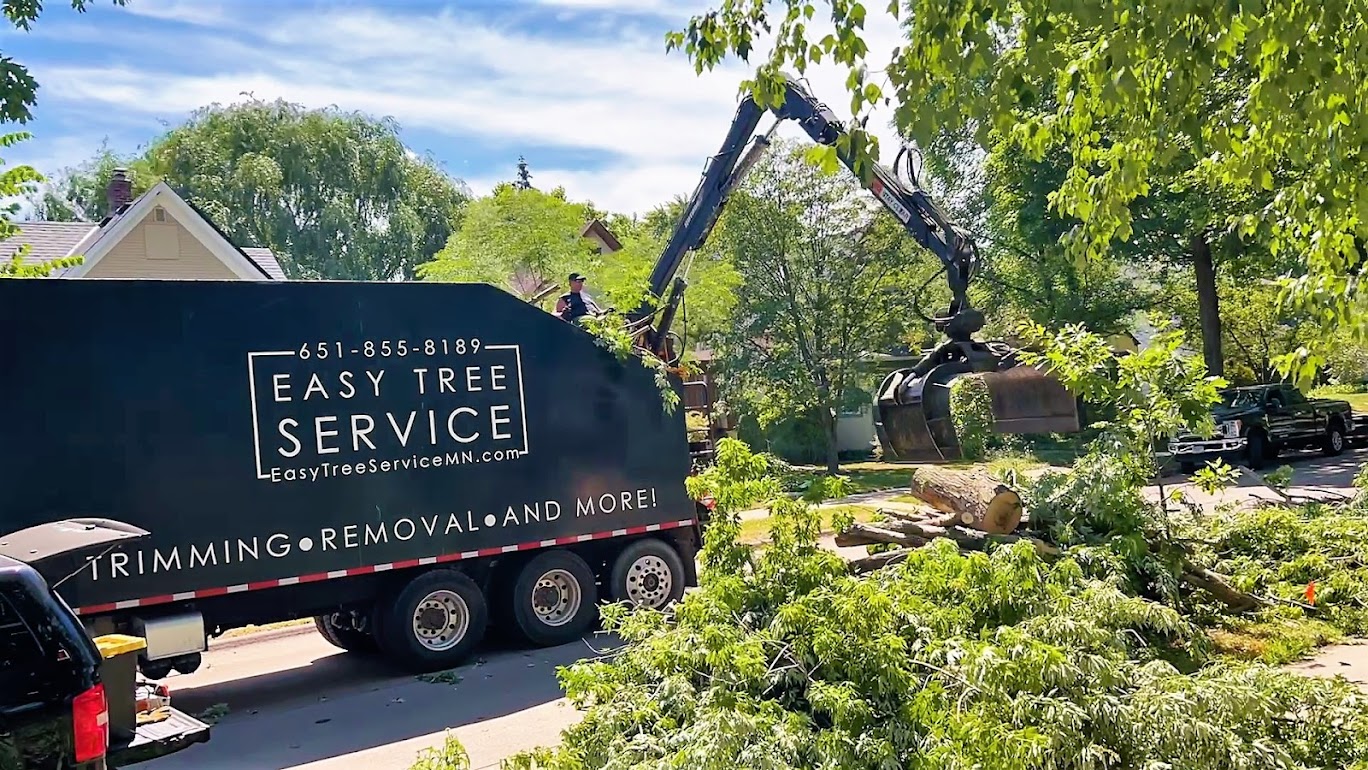
- A ground crew stacks wood and debris with rakes, blowers, and tarps for a grapple truck, staged so it does not block tenant or customer areas.
- Scheduling windows
- Early mornings, off-hours, or specific days when the site is quiet.
- Multiple trees
- Sequencing several trees so the property is not disrupted more than once.
- Documentation needs
- Photos: written scope, and records the property or association needs on file.
Services for managed properties
Send site details first
TreeCheck collects the property information that shapes the scope, so the conversation starts with facts instead of a phone-tag description.
- Location: property address and where on the site the trees sit.
- Photos: wide shots of the trees and closer shots of the problem areas.
- Number of trees: one tree, a cluster, or a full walk of the property.
- Site access: gates, lot entrances, surfaces, and clearance for equipment.
- Urgency: whether this is planned work or something blocking use of the site.
- Nearby structures: buildings, signage, lighting, fencing, and utilities.
- Preferred contact method: who to reach, and how approvals usually run.
Credentials and documentation
Licensed and insured, BBB Accredited, certified arborists on the crew. 4.9 average from 766 Google reviews. Documentation can be provided to property managers and associations on request.




Commercial tree-service questions
The Easy Tree Standard
Every Easy Tree job follows The Easy Tree Standard.
Our crews use a structured system for organizing equipment, creating controlled work areas, standardizing procedures, and continuously improving the way we work.
On commercial sites, it means staging, access routes, plywood or ground protection where equipment crosses paved or landscaped areas, and cleanup planned around tenants, parking, and pedestrian traffic before the crew arrives.
Learn about our standardRelated pages
Start with the property details.
Location, photos, tree count, and access notes are enough to begin planning the work.